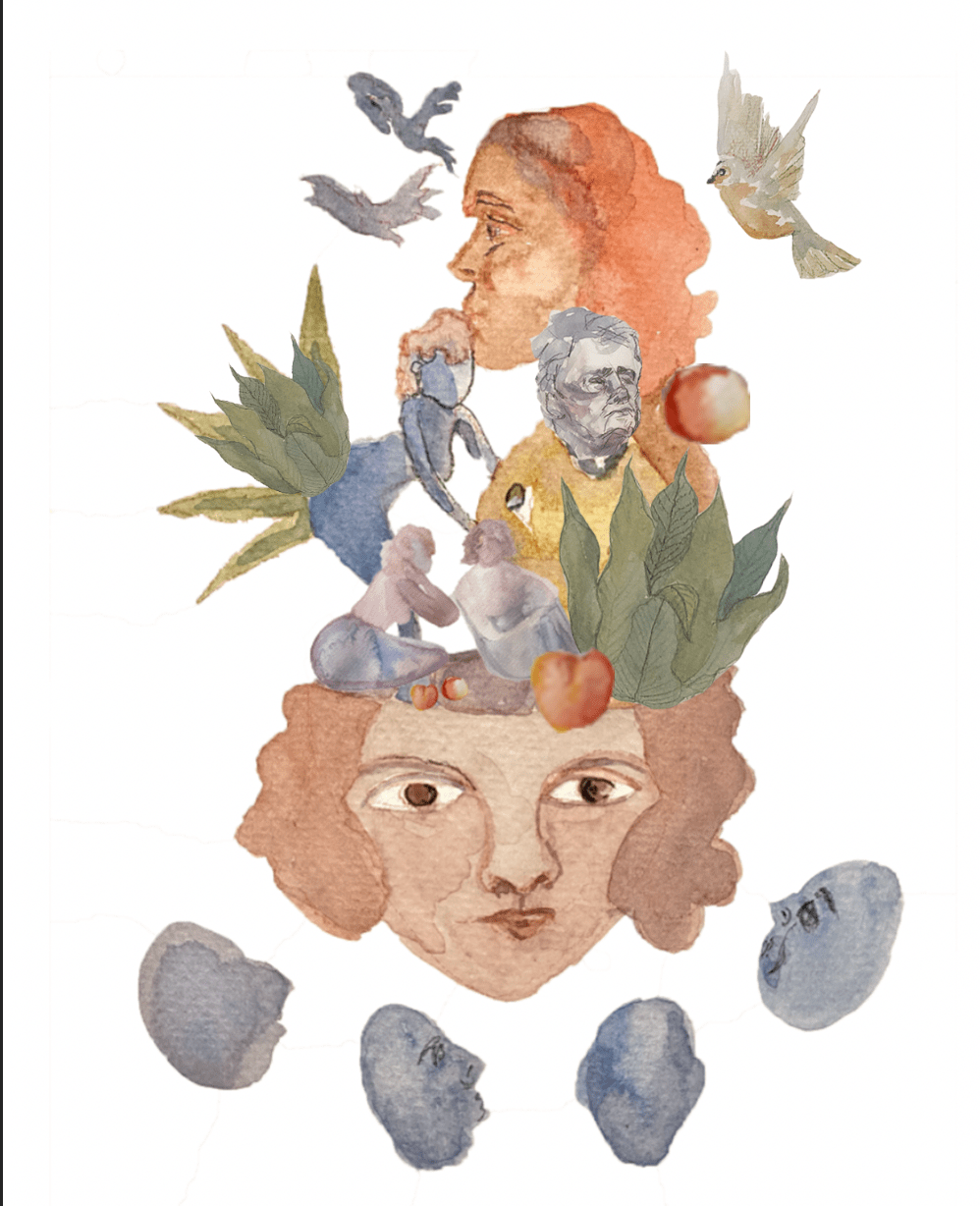
An essay on intimacy, distance, and what it means to show up — imperfectly — for the people we love.
If the past year and a half has taught me anything, it is the importance of connecting with others — most notably loved ones. Those inherited, and those chosen. As always, the irony of life is that you don’t realize something is essential until it’s gone. I think we can all attest to that.
During the global pandemic, it became increasingly difficult to meet with friends and family without fear of putting them at risk. Yet in that period of isolation, I began to reflect on how — even before COVID — I had grown accustomed to living inside a carefully constructed bubble. Between work, learning how to practice self-care, and spending time with my husband, I wasn’t making much space for nurturing friendships. Somehow, I convinced myself that social media was compensating for real connection — that liking, commenting, and watching from afar counted as staying close.
With an ever-growing to-do list, my relationships became organized around activity rather than presence. Dinners were scheduled. Milestones acknowledged when energy allowed. Most often, they happened only when I wasn’t exhausted from the weekday’s mutt-in-a-rut. Time with friends became another task checked off in my planner, rather than something to be fully inhabited. Whatever free time my husband and I could find, we often chose stillness over engagement — relishing the quiet without realizing what we were slowly relinquishing: our friendships.
I genuinely love my friends. Yet these days, I often wonder if they know that — or if they ever truly have.
A natural-born introvert, I’ve always enjoyed the company of deep thought more than conversation. My alone time is sacred to me. Still, over the past year — really, for several years now — a question has continued to surface, quietly but insistently:
Am I a good friend?
It recently dawned on me that many of my closest friends had to chase me down in order to become my friends. Some tracked my contact information through multiple failed attempts and mutual acquaintances. Others showed up repeatedly — to my classes, my home, my workplace — until I ran out of excuses not to join them. My tendency toward solitude did not make me particularly skilled at fostering relationships.
Growing up amidst constantly shifting friend groups made me somewhat nonchalant about people coming in and out of my life. I don’t take it personally when friendships change or fade. I never want to burden anyone with expectations. A noble approach, perhaps — but the reasons behind my questioning run deeper than that.
Reconnecting with others always breathes new energy into my life — when I didn’t realize I was gasping for air.
I’ve come to realize how little I know about many of my closest friends. In my effort not to pry, I sometimes can’t recall their birthdays, their parents’ names, or what those parents do for a living. For some, I’ve never met a single family member or visited the home they grew up in. I don’t call friends every day. I don’t meet them every weekend — or even every other one. And when I am going through it — those moments when one might reasonably need support — my instinct is not to reach out.
And yet, they are my best friends.
What kind of friendships are these?
The guilt grew heavier the more I reflected. So I began my own quiet investigation: reaching out to friends, listening more carefully, noticing patterns. They reassured me — again and again — that they loved me as I am, and wouldn’t change a thing about our relationships. They reminded me why we are part of each other’s lives.
There is my cousin Brine, with whom I can go months or years without speaking, only to catch up fully in a two-hour call. My childhood friend RR, who checks in periodically just to make sure I’m okay. My sister-friends Peaches, who send handwritten notes marking milestones I didn’t even realize I had reached. My inseparables Clarinette and Nana, pillars during life’s most defining moments. And my adventurous fofihna — with whom, over cigarettes and coffee on a balcony, we talk about nothing and everything.
They reminded me that we are always there for each other in the moments that matter.
Still, I can’t shake the feeling that I could be a better friend. More often than not, I find myself alone — not by chance, but by choice — even when what I truly want is someone to talk to.
Why is that?
If leading by example shaped me, then I am undoubtedly a blend of my parents. My mother is profoundly antisocial — guarded to the point of fear. She socializes almost exclusively with family or those connected by marriage. Growing up, my parents raised me with a firm grip; I rarely went out unless accompanied by an older sibling or relative. As a child, it didn’t bother me. I was surrounded by cousins, endlessly entertained.
My best friend was — and still is — my cousin Brine. We were the only two girls of the same age in the family. Yin and yang: I was the shy, introverted one; she, the bold, fiery extrovert. When cousins left for college or emigrated during Haiti’s 1990s trade embargo, Brine moved to Canada. Heartbreak. I found myself intrinsically alone.
The political and social instability of my home country only reinforced my mother’s fears. One of her favorite justifications still echoes in my mind: “I don’t know their parents. They are not my friends.” One day, exasperated, I snapped back: “Of course you don’t know them, Mom. You don’t know anyone. You have no friends.”
My father, by contrast, is a social butterfly. He knows everyone — and everyone knows him. In Port-au-Prince, strangers still shout my father’s business name when they see me. His ease with people, regardless of background, taught me that connection is a form of generosity. “Treat everyone as you would treat yourself,” he’d say, “because you never know who will show up when you need them most.”
That philosophy stayed with me.
In my first year of college, I blossomed socially. I thrived in an international community and relished newfound freedom. But financial strain forced me into work mode, and old patterns returned. It took persistent friends to pull me back into the world.
I am a product of my environment — but not a victim of it. Being alone has often been my choice. Still, I struggle to balance solitude with connection. I feel pulled by competing priorities, scrambling to center myself in what truly matters. I’m comfortable facing myself — the good, the ugly, the miraculous — but I also know I can do better.
There is a quiet guilt I carry: missing moments that mattered. Not being there when parents passed. Becoming an absent Auntie Isa. Sensing when friends are struggling, yet never making it easy for them to reach out. I believe relationships reflect who we are — and lately, I haven’t loved what I see.
That persistent question — Am I a good friend? — is not self-criticism. It’s awareness. And awareness is the beginning of change.
Friendship, I’ve learned, isn’t about quantity, but quality. It’s about surrounding yourself with people who elevate you — flaws and all. Who will ride with you on the bus as readily as in a limo. Who celebrate your joy as fiercely as their own. Who allow you the freedom to be yourself simply because you are you.
Friendship is a gift with no return receipt.
It isn’t about who you’ve known the longest — because a friend may always be waiting behind a stranger’s face.
In my life, I’ve been blessed with loyal companions and generous strangers alike — all catalysts in shaping who I am. No matter how lonely I may feel, I am never truly alone. I can always choose my family. Time doesn’t diminish friendship. Neither does distance.
I know my friends love me. Learning to be a better friend is my way of loving them back.
 In Written Word