Paris, After Everything
To move freely is, in itself, a kind of inheritance—not one given lightly.
Skip to the Paris & Stockholm guide
For a year and a half, my sister and I cared for our mother as she underwent treatment for pancreatic cancer.
Caregiving asks everything of you.
Your time, your body, your attention—the quiet discipline of remaining steady when nothing else is.
When she passed in August, we didn’t immediately know what to do with the silence that followed.
So we left.
We planned a trip to Europe with my niece and nephew—part celebration, part reset, part quiet act of survival. My sister wanted to take them to Spain first. My niece hoped to visit prospective pastry schools as she continued her culinary training. And I built in long layovers: Copenhagen on the way there, Stockholm on the way back—two cities I had never visited. We agreed to meet halfway in Paris for three days.
At the time, it felt like a convenient detour.
In hindsight, it was something else entirely.
Copenhagen
On the way to Paris, I stopped in Copenhagen.
Jet lag, I underestimated.
Winter, I misunderstood entirely.
I arrived around 10 a.m., checked into NH Copenhagen Grand Joanne, and made the mistake of sleeping. When I woke at 3 p.m., the city had already surrendered to darkness.
Still, I went out.
I walked near Tivoli, found my way to Torvehallerne, and settled onto a stool at Hallernes Smørrebrød with a sandwich that was both delicate and exacting in its composition.
But the city remained distant.
Cold, in more ways than one.
There was a composure to it—controlled, almost austere.
It did not open itself to me, and I did not insist.
Not every place asks you to linger.
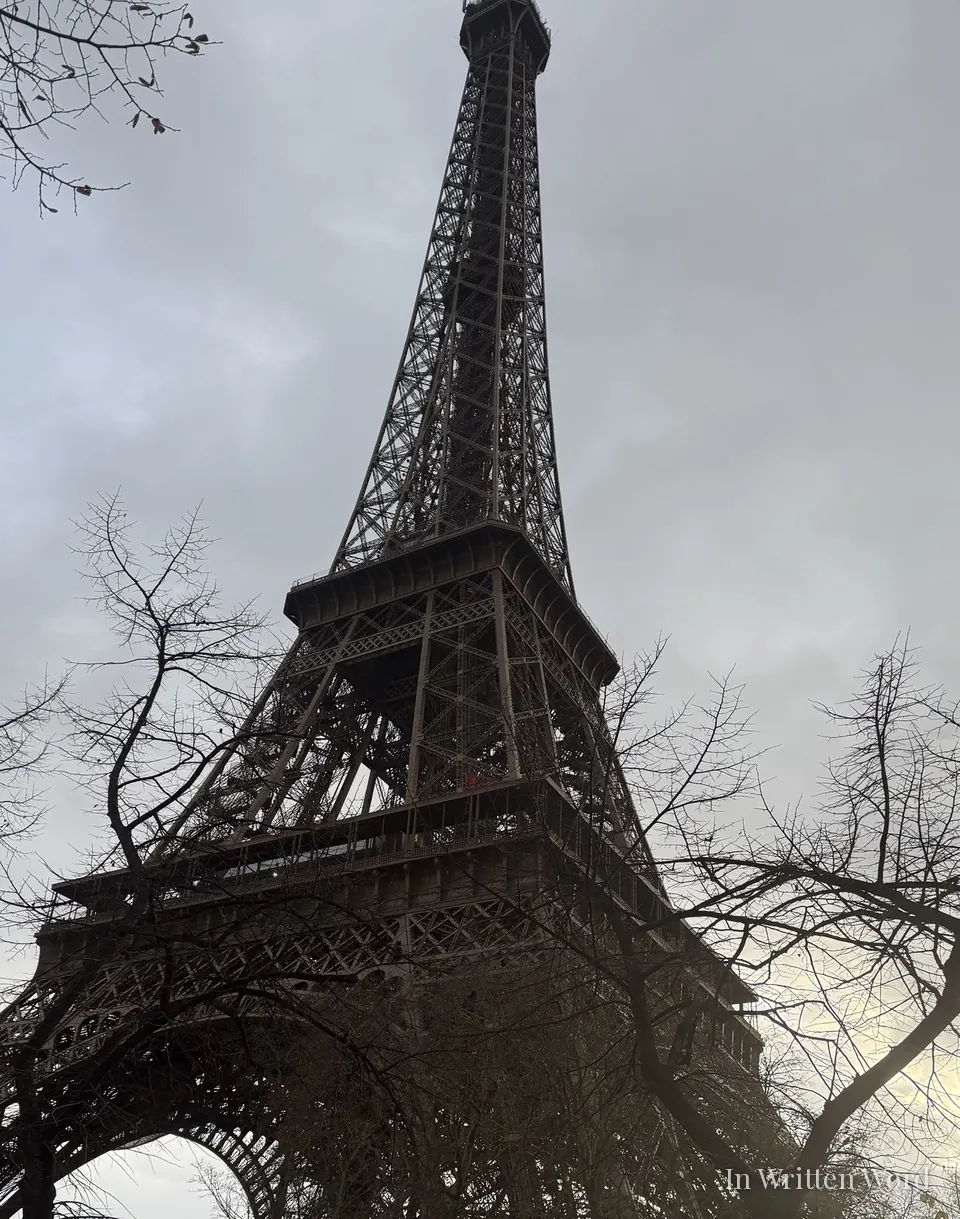
Paris
Paris is different.
It never feels like a place I need to learn. It feels like a place I recall.
As Haitians, France is not distant history; it is embedded—
in language, in education, in memory.
French is one of the first languages we are taught. Its history is introduced early, revisited often, until it becomes part of how we interpret the world. And culturally, Paris carries a cadence that feels familiar—the interweaving of Caribbean, African, and Middle Eastern influences that echo, in subtle ways, the textures of home.
There is also a quieter, more complex awareness I carry in the city—one tied to Haiti’s past as the Pearl of the Antilles, whose wealth once flowed directly into France.
A history that lingers, even when unspoken.
Familiarity, I’ve learned, does not always mean simplicity.
And yet, Paris meets me with ease.
It holds multiplicity effortlessly—the convergence of cultures, the steady flow of people arriving, building, becoming.
Like New York, it gathers ambition—from the provinces of France to its overseas territories and beyond. But where New York sharpens, Paris softens.
I return for the particulars:
music that moves from Aznavour and Piaf to Aya Nakamura and Franglish without dissonance;
cuisine that remains, unequivocally, my favorite in the world;
desserts that are precise, balanced, indulgent without excess.
There is nothing placed before me in Paris that I will not finish.
We stayed near Porte Saint-Martin, in an artist loft that made the city feel immediate. Each morning, we walked to Mamiche—rain or shine—for fresh bread. The line curved down the block—a mix of locals and those, like us, borrowing the feeling for a moment.
That ritual alone is reason enough to return.
We moved without urgency. We let the days take shape on their own.
I took my niece to Galeries Lafayette Le Gourmet, Pierre Hermé, and La Grande Épicerie. But what stayed with me was not where we went—it was how she moved through those spaces.
She studied everything: structure, technique, detail.
Her training at the Culinary Institute of America was evident in her gaze—attentive, discerning, exacting.
Her excitement felt inherited.
A continuation.
We celebrated her 21st birthday there—an evening that ended at Jangal, where the music resists stillness. A seamless blend of world sounds, hip-hop, and R&B; a room in constant motion.
It was also my first time in Paris without an agenda.
No reservations secured weeks in advance. No exhibitions mapped out. No urgency to take from the city.
I moved differently.
Some mornings, I lingered in bed while the others went out. Afternoons unfolded slowly—an egg sandwich at Paperboy, shared among a crowd that seemed to belong to the city in a way I briefly borrowed.
I allowed Paris to meet me without expectation—to surprise me, to steady me, to hold me.
Paris, at night, does not ask for restraint.
It asks you to remain.
Stockholm
Stockholm came at the end, and it felt different from the start.
There was an immediacy to it—a sense that something awaited discovery.
This time, I adjusted. I dropped my bags and stepped back outside.
I walked to Gamla Stan, past the Royal Palace and the Nobel Prize Museum, then into a holiday market—hot chocolate from Café Chokladkoppen in hand, the city revealing itself gradually.
Later, at Kungsträdgården, I passed an ice rink where rock dissolved into amapiano—an unlikely pairing that somehow held.
That was the moment I knew I would return.
The city carried texture—a quiet undercurrent of energy.
I continued along Birger Jarlsgatan, where luxury storefronts line the avenue with quiet confidence. Just beyond that polish, each side street revealed something more intimate—interior spaces, design ateliers, glimpses into another layer of the city.
That evening, I went to Babette.
Small, almost inconspicuous. Two chefs working with deliberate precision. A menu that required no explanation.
I sat at the bar and began speaking with the people beside me.
One glass became two. Plates arrived one after another, unhurried and precise. Conversation unfolded with ease.
The kind of exchange that feels increasingly rare—unguarded, unforced, unplanned.
We left as more than strangers.
And I knew I would return.
What Remains
It was only a week.
But it carried weight beyond its duration.
A shift.
A reorientation.
A quiet recognition that life continues—not in opposition to loss, but alongside it.
This trip offered us space to exhale. To move differently. To remember who we were beyond what we had been holding.
And in its own way, it became a form of tribute.
To move freely is, in itself, a kind of inheritance—not one given lightly.
Our mother taught us to travel. To remain curious. To step fully into the world.
So that’s what we did.
We lived.
And in doing so, we became—slowly, quietly—what my mother imagined for us:
citizens of the world, moving freely and independently, wherever life might take us.
Field notes
Where We Stayed, Ate & Wandered
Stay in Paris
Hedonist House
An artist loft near Place de la République and Porte Saint-Martin that made the city feel immediate. The canal, Mamiche and Paperboy are all a short walk away.
Eat in Paris
Mamiche
For fresh bread every morning, rain or shine. The rue du Château-d’Eau bakery is the one closest to Porte Saint-Martin. The line curves down the block, and it’s worth joining.
Paperboy
On rue Amelot, near République. For an unhurried afternoon and an egg sandwich, among a crowd that seems to belong to the city.
Pierre Hermé
For desserts that are precise, balanced, indulgent without excess.
Shop in Paris
Galeries Lafayette Le Gourmet
The food hall behind the Opéra Garnier. Go for the pastry counters, and take your time.
La Grande Épicerie
For anyone who studies pastry the way my niece does: structure, technique, detail.
Dance in Paris
Jangal
Where we ended my niece’s 21st birthday. World sounds, hip-hop and R&B, and a dance floor in constant motion.
Le Rouge Pigalle
A former cabaret in Pigalle that still has its red velvet, mirrors and rococo gilding. The DJs move from house to hip-hop.
Wander in Paris
Canal Saint-Martin
For walking without trying to arrive anywhere.
Stay in Stockholm
At Six
A design hotel in a former bank building on Brunkebergstorg, a few minutes’ walk from Kungsträdgården, with Gamla Stan close by.
Eat in Stockholm
Babette
Small, almost inconspicuous, with two chefs working with deliberate precision. Sit at the bar and talk to the people beside you. One glass becomes two.
Café Chokladkoppen
For hot chocolate on Stortorget, carried through the Christmas market.
Wander in Stockholm
Gamla Stan
Past the Royal Palace and the Nobel Prize Museum, then into the Christmas market on Stortorget as the lights come on.
Kungsträdgården
For the winter ice rink, where I heard rock give way to amapiano.
Birger Jarlsgatan
Luxury storefronts on the avenue, with interiors shops and design ateliers on the side streets.